Continuing Bonds: Healthy Ways to Honor a Dog's Memory
Jun 16, 2026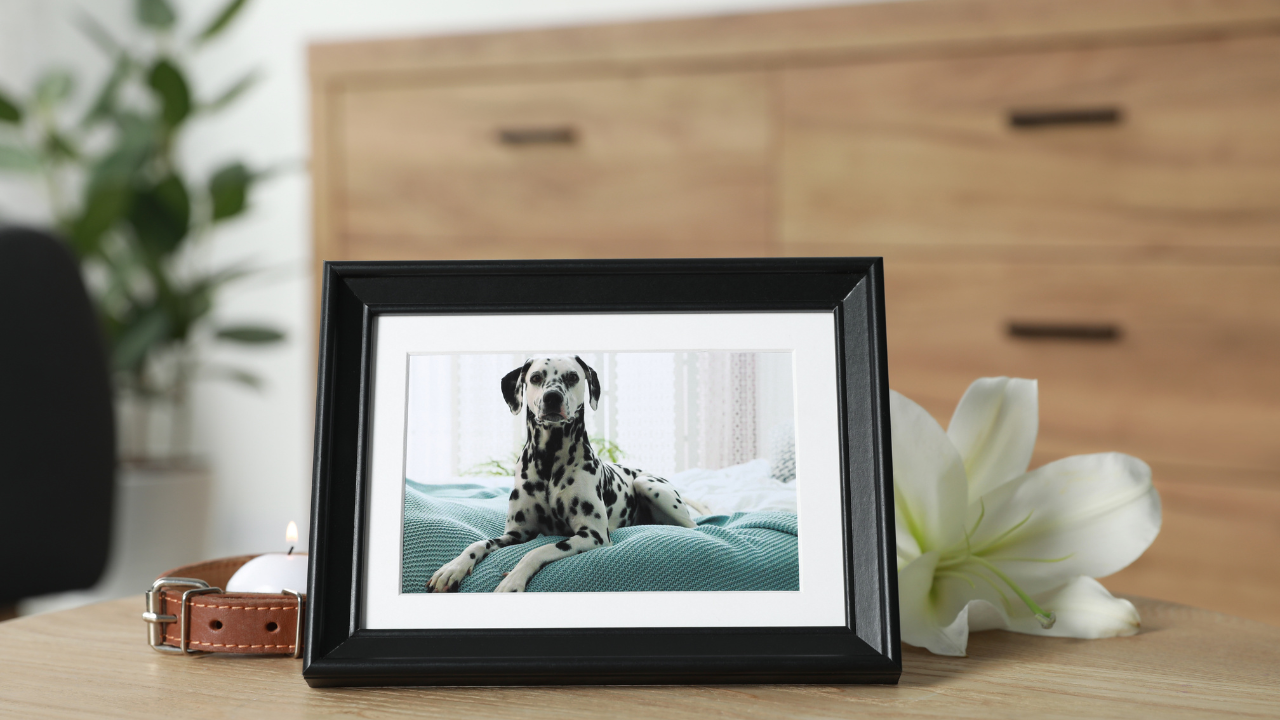
If you've lost a dog, you've probably heard some version of it's time to move on, you need closure, you have to let go. Maybe you've said it to yourself, and felt like a failure when you couldn't. Maybe the collar is still by the door, and you're not ready to move it, and some quiet voice tells you that means you're grieving wrong.
You're not. And one of the most freeing ideas in modern grief research is the reason why.
The reframe: you don't have to let go
For most of the twentieth century, the dominant theory of grief held that healing meant detaching — severing the bond with the one you lost, putting them in the past, and "moving on" to reinvest in life. By that logic, still feeling deeply attached months later was a problem to be solved.
In 1996, a group of grief researchers turned that model on its head. In Continuing Bonds: New Understandings of Grief, Dennis Klass, Phyllis Silverman, and Steven Nickman gathered evidence that healthy grievers don't sever the bond at all — they transform it (Klass et al., 1996). The relationship doesn't end; it changes form, from a bond with a living presence into an ongoing inner connection you carry forward. You don't get over the ones you love. You learn to carry them with you.
That single shift takes an enormous weight off a grieving heart. The goal was never to stop loving your dog. The goal is to find a way to keep loving them that fits the shape of your life now.
This is true for dogs, too — and the research bears it out
The bond with a dog is a real attachment, and so is the grief when it ends. Researchers have found that the same continuing-bonds process plays out in pet loss. In one study of bereaved pet owners, greater reliance on continuing-bonds coping — staying connected to their pet's memory in meaningful ways — was associated with lower levels of grief and fewer related symptoms (Packman et al., 2011). The wider research is genuinely mixed, and we'll come to why in a moment — but the reassuring through-line is this: memorializing your dog isn't a sign you're stuck. For many people it's part of how they move through.
So when you frame that photo, keep that collar, or talk to your dog out loud on a hard day — you're not failing to let go. You're doing something grief researchers would recognize as healthy.
Not every bond is equally healing
Here's the honest nuance, because "healthy ways" is the whole point of this post. Continuing bonds come in different forms, and they don't all comfort us equally.
Researchers draw a gentle distinction between internalized bonds — remembering your dog, reflecting on what they meant, holding their memory as a kind of inner anchor and carrying forward what they gave you — and externalized ones, like vividly sensing your dog is still physically present. The internalized forms tend to bring comfort and even growth over time; the externalized ones, when they persist and keep you from accepting the loss, are more often linked to grief that stays stuck (Field & Filanosky, 2010). A broad review of pet-loss research found the same thing: a continuing bond can soothe grief or intensify it, depending on its nature, and at its best it can support real post-traumatic growth (Hughes & Lewis Harkin, 2025).
None of this means it's wrong to sense your dog's presence — feeling them curled in their old spot, hearing phantom nails on the floor, is one of the most common and human parts of grief, and it isn't a problem. The point is simply this: the practices that tend to heal are the ones that help you carry the bond inward — into memory, meaning, and ongoing love — rather than ones that keep you waiting at the door for them to come back. Everything below is chosen to lean that way.
Why this matters even more when you've lost a dog
There's a particular ache in pet loss: the world doesn't always treat it as a real loss. There's no bereavement leave, no funeral, often no casserole on the doorstep. Grief that society doesn't fully recognize has a name — disenfranchised grief — and it leaves mourners feeling isolated, as though they have to apologize for hurting this much over "just a dog" (Doka, 1989).
That's exactly why deliberately honoring your dog matters. Memorial practices give a disenfranchised grief a legitimate place to go. They are a quiet, powerful way of declaring that this bond was real, this love counted, and you will not minimize it just because the world might. You get to decide that your dog's life is worth marking.
Healthy ways to honor your dog's memory
There's no required list and no timeline. Choose what feels true to your dog and your bond — one of these, or several, now or years from now.
Make something you can hold. A paw print or clay impression, a lock of fur, their collar or tag in a small shadow box, a framed photo, a custom portrait, a bit of memorial jewelry. Tangible keepsakes give the bond a home you can return to.
Tell their story. Write your dog a letter. Keep a memory journal of the funny, infuriating, tender things they did. Make a photo book. Share stories with the people who knew them. Putting a life into words is one of the oldest ways humans weave a loss into the ongoing fabric of who we are.
Mark time with ritual. Light a candle on a hard evening. Plant a tree, a rosebush, or a small garden in their honor. Note their adoption day or the anniversary in a way that feels right — not as a wound to reopen, but as a moment to remember on purpose. Ritual gives grief a container, so it doesn't have to flood everything.
Carry forward what they gave you. This is the deepest bond of all. Ask what your dog taught you — patience, presence, the art of a slow morning, love without conditions — and let it change how you live. When you catch yourself being a little more present because of them, the bond is doing exactly what a healthy continuing bond is meant to do.
Turn love into good. When you're ready, let the love go somewhere: donate or volunteer at a shelter, foster a dog who needs a soft place to land, support cancer research or a foundation, help another family afford care for a sick pet. Generosity in your dog's name transforms private grief into something that warms the world a little. Many people find this is where their grief finally starts to feel like meaning.
Keep a small place for them. A shelf, a corner, a windowsill — their photo, their collar, a favorite toy. Not a shrine to sorrow, just a spot where the bond is welcome to live in your home.
What honoring really means
Healing was never about loving your dog less. The collar by the door doesn't have to mean you're stuck, and the day you finally move it won't mean you've forgotten. You're allowed to grieve for a long time, and you're allowed to be happy again, and neither one is a betrayal. The love simply changes jobs — from caring for a dog who was here to carrying a dog who always will be.
That's the quiet promise of continuing bonds: the relationship doesn't end. It comes home, and it stays.
Want to help others walk this path?
Knowing how to gently offer this reframe — to a family bracing for goodbye, or sitting in the silence afterward — is a genuine skill, and a profound gift. The Certificate in Pet Grief Counseling trains you to support grieving families with both warmth and real grounding in how grief actually works: continuing bonds, disenfranchised grief, and the practices that help people carry their love forward. If walking beside people in their hardest moments is the work your heart keeps returning to, this is where you learn to do it well.
[Explore the Certificate in Pet Grief Counseling →]
References
Doka, K. J. (1989). Disenfranchised grief: Recognizing hidden sorrow. Lexington Books.
Field, N. P., & Filanosky, C. (2010). Continuing bonds, risk factors for complicated grief, and adjustment to bereavement. Death Studies, 34(1), 1–29.
Field, N. P., Orsini, L., Gavish, R., & Packman, W. (2009). Role of attachment in response to pet loss. Death Studies, 33(4), 334–355.
Hughes, B., & Lewis Harkin, B. (2025). The impact of continuing bonds between pet owners and their pets following the death of their pet: A systematic narrative synthesis. OMEGA — Journal of Death and Dying, 90(4), 1666–1684.
Klass, D., Silverman, P. R., & Nickman, S. L. (Eds.). (1996). Continuing bonds: New understandings of grief. Taylor & Francis.
Packman, W., Carmack, B. J., & Ronen, R. (2012). Therapeutic implications of continuing bonds expressions following the death of a pet. OMEGA — Journal of Death and Dying, 64(4), 335–356.
Packman, W., Field, N. P., Carmack, B. J., & Ronen, R. (2011). Continuing bonds and psychosocial adjustment in pet loss. Journal of Loss and Trauma, 16(4), 341–357.
This article is educational and offers general support, not clinical or mental-health treatment. Grief that feels unrelenting or unmanageable deserves the care of a qualified grief counselor or mental-health professional.
Become a Dog Cancer Coach.
Transform your passion for dogs into a meaningful, heart-led career with our Holistic Dog Cancer Coach Certification—an in-depth, flexible online program designed for compassionate caregivers ready to make a difference.
Stay connected with news and updates!
Join our mailing list to receive the latest news and updates from our team.
Don't worry, your information will not be shared.
We hate SPAM. We will never sell your information, for any reason.