Learning About Dog Hospice Care at Home
Mar 15, 2026
The world has suddenly gone quiet. You’re holding a piece of paper, a diagnosis, and a lab report, and it feels like it weighs a thousand pounds. We know that feeling. We’ve stood in that same clinical hallway, the air suddenly too thin, trying to process the words "end of life care."
If you are reading this, it’s likely because the "fight" has shifted. You’ve moved from the exhausting rhythm of scans and aggressive treatments to a new, quieter mission: hospice.
At the Drake Dog Cancer Foundation, we don't see hospice as "giving up." We see it as the ultimate act of love. It is the transition from trying to add more days to their life to adding more life to their days. This is your guide to navigating that transition with dignity, grace, and a heavy dose of compassion.
What Does Hospice Actually Mean?
In the medical world, we call it "palliative care." In our world, we call it a soft landing.
Hospice care is appropriate when a dog is no longer responding to curative treatments or when those treatments would cause more suffering than the disease itself. The goal isn't to fix; it’s to comfort.
Think of it this way: if your dog’s immune system has "intelligence officers" (B-cells) and "soldiers" (T-cells) that are no longer able to win the war, your job changes from being a General to being a Guardian. You are there to ensure the environment is peaceful, the pain is managed, and the spirit is nourished.
Creating the "Sanctuary" at Home
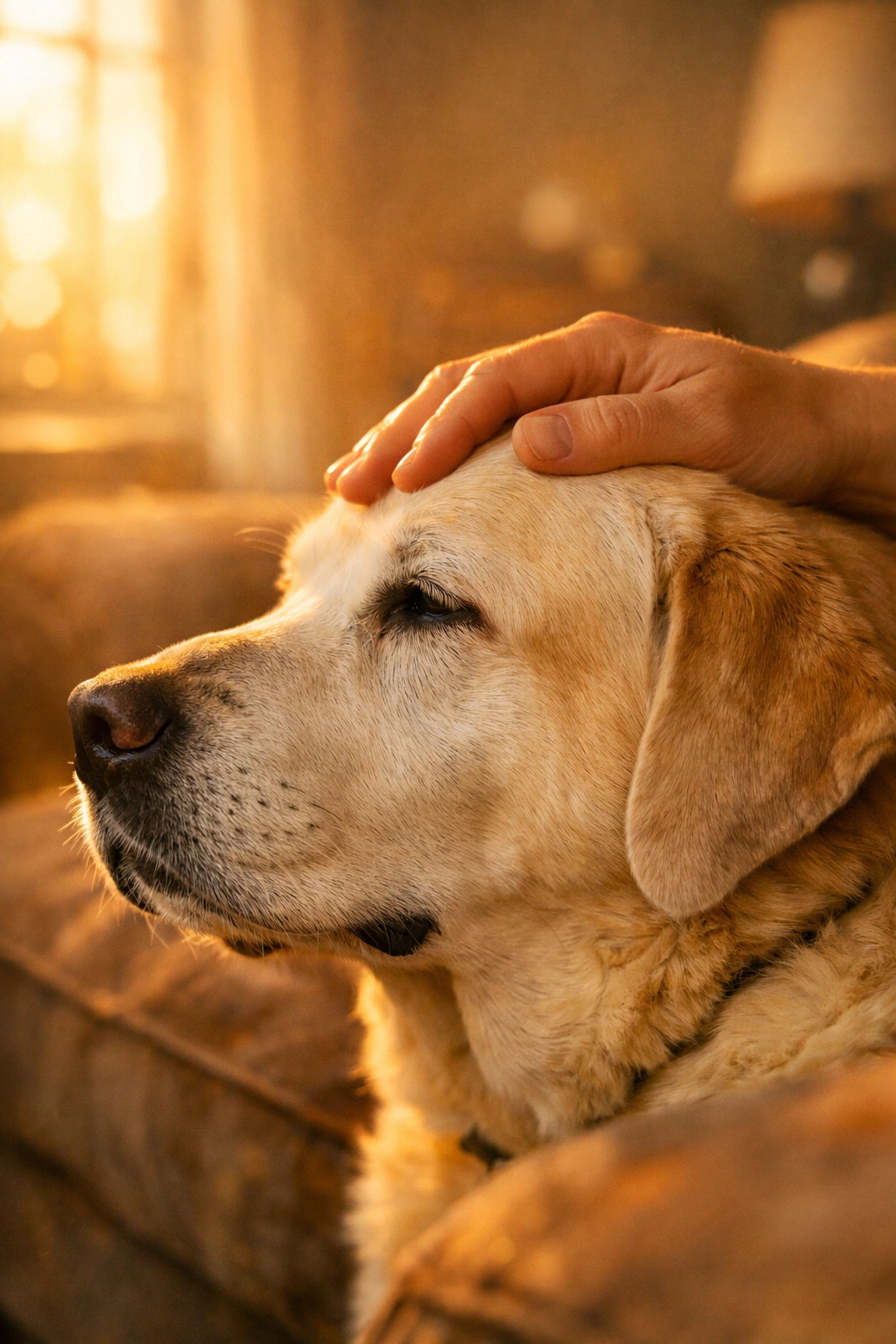
Your home is already your dog’s favorite place on Earth. To turn it into a hospice sanctuary, you don't need a medical suite; you need to look at your living room through their eyes.
1. The Foundation of Comfort
As dogs age or deal with cancer, their internal thermostat can go haywire.
- Bedding: Use thick, orthopedic foam to protect bony joints. If incontinence is an issue, layer the bed with soft, absorbent pads and have several washable covers on hand.
- Flooring: Slip-and-slide floors are the enemy of a weak dog. Spread yoga mats or non-slip runners across high-traffic areas. This gives them the confidence to stand and move without the fear of a painful fall.
- Accessibility: If your dog usually sleeps on your bed, consider a sturdy ramp. If they can no longer make the climb, it might be time for a "slumber party" on the floor with them.
2. Scent and Sound
Dogs live through their noses. Keep your scent close. An old t-shirt you’ve worn placed in their bed can lower their cortisol levels instantly. Keep the house quiet. Soft music or white noise can help mask the "scary" sounds of the neighborhood that might startle a dog who is feeling vulnerable.
Nutrition: When the Rules Change
One of the hardest parts of hospice is watching the "food drive" disappear. Why won't they eat? is the question that keeps us up at night.
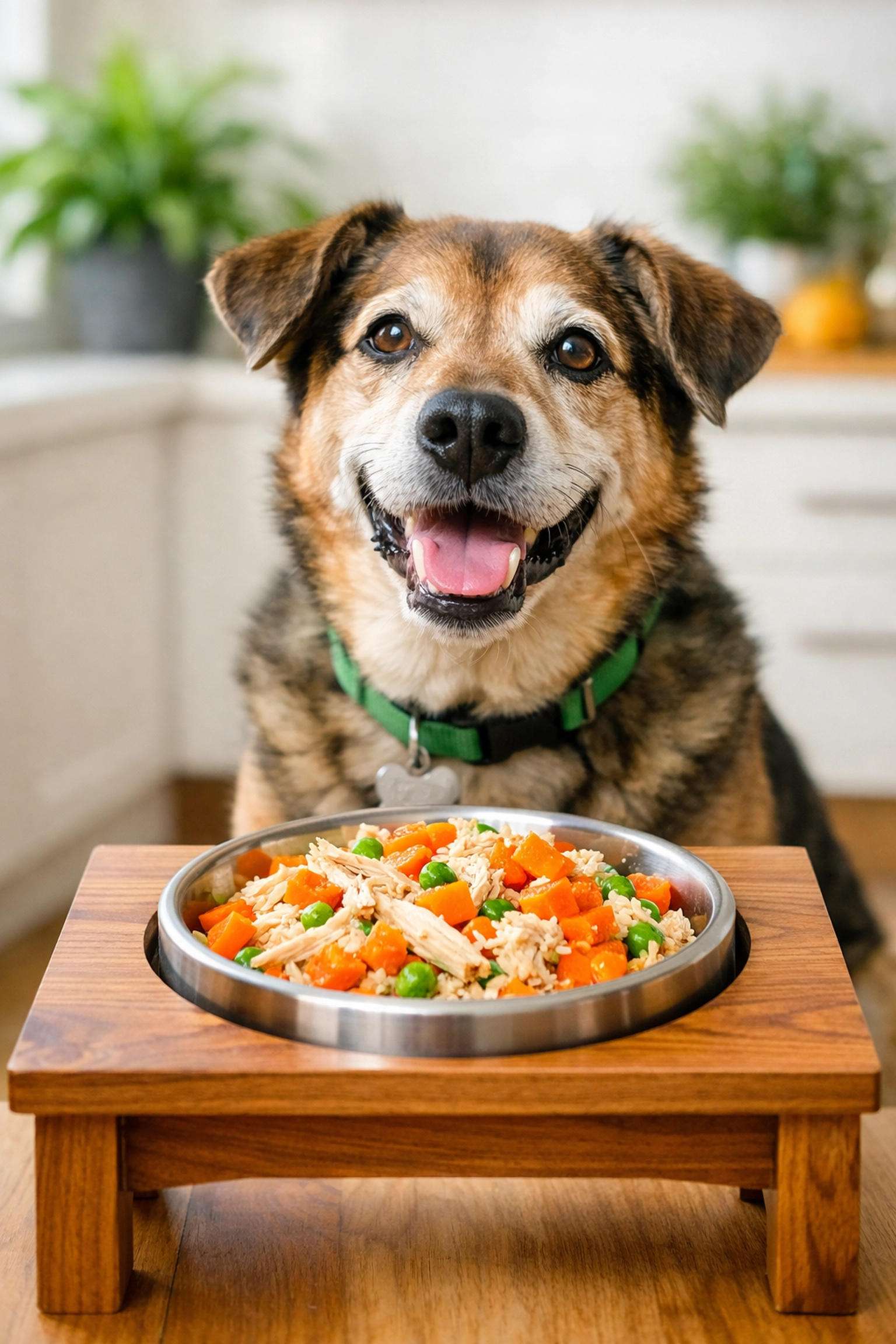
In hospice, the strict "cancer diet" often takes a backseat to "whatever makes them happy." If they want a piece of plain boiled chicken or even a nibble of a cheeseburger, let them have it.
- Elevate the Bowls: Neck strain is real. Raising the food and water bowls can make the act of eating much less of a chore.
- Hydration is Key: If they aren't drinking much water, try bone broth or adding warm water to their food. You can learn more about specific nutritional support for dogs with cancer here.
- The "Spoil" Factor: Now is the time for the "illegal" treats. If a little bit of peanut butter or a slice of turkey brings a wag to that tail, it’s a win.
Managing the "Ouch": Pain and Mobility
Pain management is the heartbeat of hospice care. Dogs are masters at hiding discomfort: it's an evolutionary survival trait. By the time they are limping or whining, the pain is often quite advanced.
Signs of Pain to Watch For:
- Heavy panting when it’s not hot.
- Restlessness or inability to get comfortable.
- Licking a specific joint incessantly.
- "Glassy" or dilated eyes.
We often recommend a multi-modal approach. This means using traditional medications from your vet alongside supportive therapies. Many of our community members have found that high-quality CBD acts as a potent antioxidant and helps manage the "anxiety" that comes with chronic pain.
Always work closely with a vet who supports at-home hospice to find the right balance of medication.
The Logistics of Dignity (Hygiene)
There is a specific kind of heartbreak in seeing a once-proud dog struggle with accidents. It’s important to handle these moments with zero shame and maximum efficiency.
- The "Waterless" Bath: Use pet-safe wipes or waterless shampoo to keep them smelling fresh without the stress of a full bath.
- Keep Them Dry: If your dog is immobile, they are at risk for "urine scald" (skin irritation from dampness). Change pads immediately and use a barrier balm on their skin if needed.
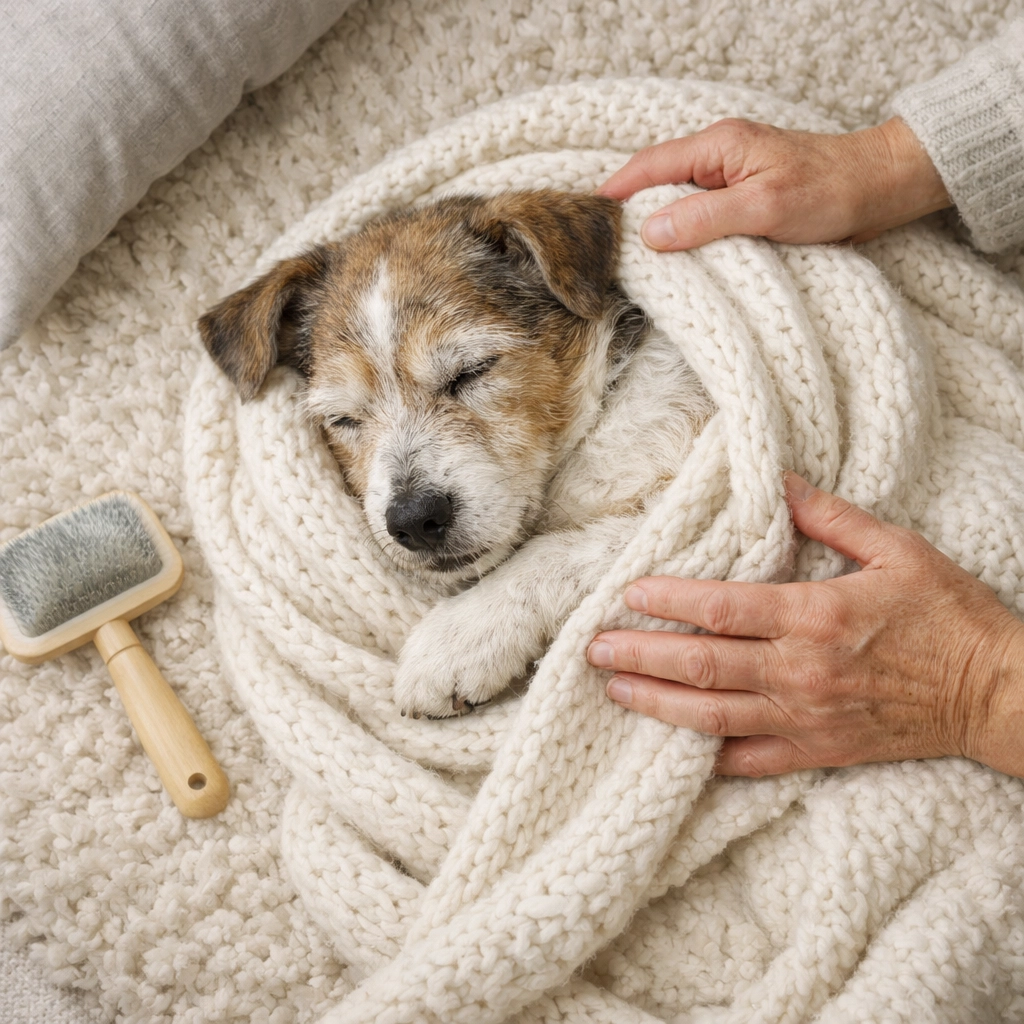
- Gentle Grooming: A soft brush can be incredibly soothing. It’s a way to touch them and bond with them that doesn't require them to move or perform.
The "Good Days vs. Bad Days" Metric
One of the most common questions we get at the Foundation is: How will I know when it’s time?
We suggest using a "Quality of Life" calendar. Every night, mark the day as "Good," "Neutral," or "Bad."
- A Good Day: They ate, they engaged with you, they seemed comfortable.
- A Neutral Day: They were sleepy and quiet, but not in distress.
- A Bad Day: They were in pain that meds couldn't touch, they couldn't get up, or they seemed "gone" mentally.
When the "Bad" days outnumber the "Good" days for a week straight, or when your dog can no longer do the things that make them them (like wagging at the door or sniffing the air), your "Golden Rule" kicks in: Better a week too early than a minute too late.
Finding Your Strength
You cannot pour from an empty cup. Providing hospice care is physically and emotionally draining. You are "on call" 24/7, and the weight of the coming loss is heavy.
- Lean on the Community: You are not alone in this. Joining a dog cancer community can provide you with a space to vent, cry, and ask the "silly" questions that only other dog parents understand.
- The Grief Journal: Grief doesn't start when they pass; it starts the moment you know they are leaving. We offer a free grief journal for dogs to help you process these big emotions and document the beautiful moments that still happen in the quiet of hospice.

What if it Happens at Home?
Sometimes, despite our plans for a peaceful clinical euthanasia, nature takes its own course. If your dog passes away at home:
- Don't Panic: It is a natural process. Their body may release fluids or take "agonal breaths" (reflexive gasps). This is not distress; it is the body shutting down.
- Make Them Comfortable: Place a soft blanket over them.
- The Final Goodbye: Allow your other pets to sniff them. This helps them understand that their friend has moved on and reduces their own anxiety.
- Call Your Vet: They can guide you on the next steps for aftercare or cremation services.
A Final Word of Encouragement
You are doing a brave thing. By choosing hospice, you are choosing to walk through the fire so your dog doesn't have to. You are the bridge between their life and whatever comes next, and there is no person they would rather have by their side than you.
Focus on the small wins. The way their ear twitches when you whisper their name. The warmth of their fur under your hand. These moments are the "gold" of hospice.
You’ve got this. And we’ve got you.
Looking for more ways to support your dog's comfort? Explore our guide on how to support stage 5 lymphoma or browse our blog for more wellness tips.
Become a Dog Cancer Coach.
Transform your passion for dogs into a meaningful, heart-led career with our Holistic Dog Cancer Coach Certification—an in-depth, flexible online program designed for compassionate caregivers ready to make a difference.
Stay connected with news and updates!
Join our mailing list to receive the latest news and updates from our team.
Don't worry, your information will not be shared.
We hate SPAM. We will never sell your information, for any reason.